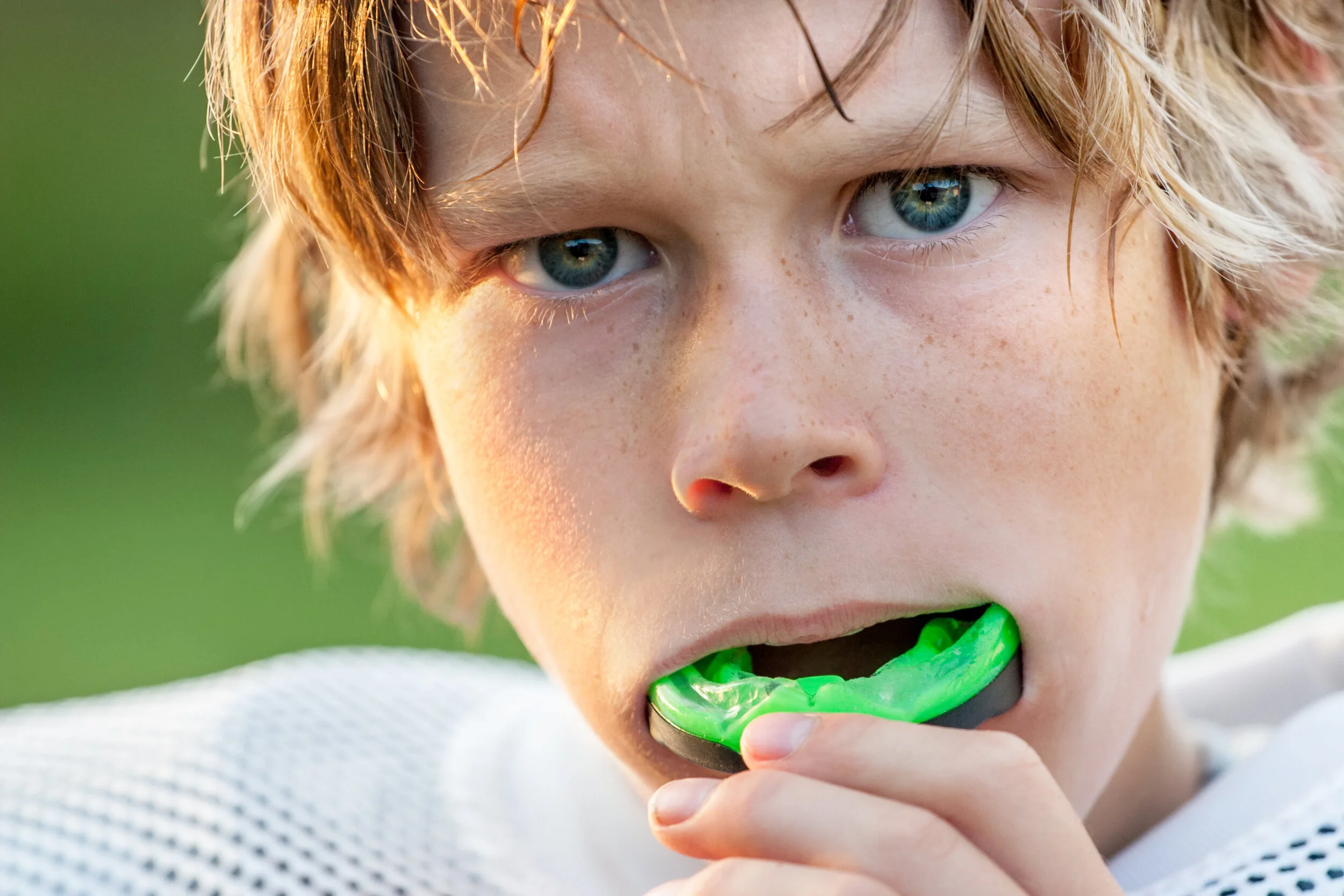
Helping your child stay safe on the field starts with understanding the role of sports mouthguards for kids, especially when braces are involved. As more Ipswich children join local rugby, netball, basketball, and hockey teams each year, dental protection has become a crucial part of responsible sports preparation. A well-made mouthguard doesn’t just cushion the impact of a collision; it preserves your child’s developing teeth and protects the investment you’ve made in their orthodontic treatment.
Parents often focus on helmets, shin guards or good footwear, but the mouth is one of the most vulnerable areas during sport. Even in non-contact activities, elbows, balls, or accidental falls can lead to painful injuries. For children undergoing orthodontic treatment, these risks increase because brackets and wires can easily cause cuts, irritation, or damage when a hit occurs. Understanding these risks early helps you make informed decisions about your child’s safety.
That’s why choosing the right sports mouthguards for kids with braces in Ipswich is so important. When fitted correctly, it shields both the braces and soft tissues, offering dependable protection so your child can play confidently and safely.
Why Sports Mouthguards for Kids Are Essential
Even a light blow to the mouth can turn into a serious dental emergency. Children’s teeth are still developing, and metal braces have brackets and wires that can easily cut lips or cheeks on impact. A mouthguard acts like a cushion, absorbing shock and keeping teeth in place. Mouthguards protect children from broken jaws, fractured, cracked or knocked-out teeth, cut lips and tongues, injuries that are often difficult and expensive to treat. In practice, wearing a mouthguard reduces the risk of dental injuries by about 60%.
If you play a sport where there’s a risk of injury to your teeth, you should wear a mouthguard. With braces, the risk of injury is even higher. Kids with braces should always use a custom-fitted guard to protect the orthodontic appliance and mouth tissues. In short, a well-designed mouthguard can help prevent pain, protect their orthodontic treatment, and keep them playing sports safely.
Types of Mouthguards for Kids: Finding the Right Fit
There are three main types of sports mouthguards, each with pros and cons:
Custom-Fit Mouthguards:
These are moulded from an impression of your child’s teeth and braces. They offer the snugest, most comfortable fit. Dentists can design them to fit comfortably and accurately over the braces, allowing normal breathing and speech. Custom guards are the gold standard for protection. They cost more and require a dentist visit, but consider it an investment in safety.
Boil-and-Bite Mouthguards:
These are typically found in sports stores or pharmacies. You soften the guard in hot water and have your child bite to shape it. A boil-and-bite guard can be moulded over braces, but it may feel bulky and usually needs re-fitting as the braces shift. It’s cheaper and easier to replace, making it a decent option for occasional use. An ill-fitting guard can do more harm, so if you go this route, check the fit often.
Stock (Ready-to-Wear) Mouthguards:
Off-the-shelf guards come one-size-fits-all. They’re the least expensive and ready immediately, but they fit poorly, especially over braces. They often require the wearer to clench their teeth to keep them in place. For braces wearers, stock guards are generally a last resort or a very short-term solution.
Whatever type of mouthguard you pick, ensure it covers all teeth and fits over the braces snugly. It should not wobble or choke. Proper fit is crucial; even a short practice without a guard can lead to an injury.
Why a Custom-Fit Mouthguard Is Best for Braces
A custom-fit mouthguard is the gold standard for kids with braces. After taking a dental impression or 3D scan, a lab forms the mouthguard so it covers each tooth exactly. This precision means it stays in place and spreads impact forces evenly across the teeth and jaw. Custom guards are made from shock-absorbing EVA material, often 3–4 mm thick, ensuring full coverage over braces and gums.
For growing kids, custom-fit guards have added benefits. A dentist can include extra room in the design to allow slight tooth movement under braces. If the mouth changes (new teeth coming through, or orthodontic adjustments), the dentist can remould or remake the guard. Custom guards are also easier for kids to wear consistently. They breathe easier, speak more normally, and don’t slip, so kids are far more likely to keep them on. In fact, Queensland School Sport policy strongly recommends custom-fit guards for students in contact sports.
Although custom guards cost more upfront (often $100–$250), the investment is worthwhile. Consider it dental insurance: a high-quality guard prevents injuries that could cost thousands in treatment. Many private health plans in Australia offer rebates for custom mouthguards, further reducing costs.
How to Find the Best Sports Mouthguards for Kids
As an Ipswich parent, you have options. Many local dentists and orthodontists offer sports mouthguards (sometimes called custom kids sports mouthguards). Visiting a professional means the guard is tailored to your child’s smile and braces. Yearly replacement for growing children to allow for changes, a reminder to check fit whenever the braces are tightened.
When comparing mouthguards, consider these factors:
- Comfort and Fit: The guard should be snug but not painful. Your child must be able to talk and breathe easily. If it slips or chafes, see a dentist for an adjustment.
- Coverage: The guard should cover all teeth (especially the back molars) and extend over the brackets and wires without cutting the lips. A good guard allows for missing and erupting teeth and fits over orthodontic wires.
- Thickness and Durability: Thicker material (around 4 mm in key areas) is recommended for high-impact sports. Custom guards tend to last longer than store-bought ones.
- Cost vs. Use: If sports are infrequent, a quality boil-and-bite may do. But for frequent play, a custom guard’s benefits outweigh the cost. It’s all about keeping your child safe and in the game.
A good tip: always store the mouthguard in its ventilated case, clean it after use, and encourage your child to wear it every time they step onto the field or court. A well-fitting guard that doesn’t hurt is a guard they’ll actually use.
Kids’ Mouthguard Safety Tips Every Parent Should Know
Protecting your child’s braces with a mouthguard also means using and caring for it properly. Here are key kids’ mouthguard safety tips to follow:
Always wear it during sports: Make wearing a mouthguard part of the routine. Wear the mouthguard at all times, including games and training sessions. This consistency will protect against both practice impacts and games. Coaches and schools in Ipswich usually require mouthguards for sports like rugby, AFL and hockey.
Choose the right type: For braces, pick a guard designed or adjustable for orthodontics. Custom-fit or braces-specific guards are best. Avoid stock guards or even most boil-and-bite products, as these can press on brackets and may not fit at all. Some brands are made to work with braces, but the safest bet is a custom-fitted mouthguard.
Clean and store properly: After each use, rinse the mouthguard in cool tap water and gently brush it with a soft toothbrush (no hot water or toothpaste). Allow it to air-dry completely, then store it in a ventilated case. This prevents distortion, bacterial buildup and loss in a sports bag. Keep the case clean too; rinse it weekly.
Inspect and replace: Check the guard for wear or damage before each season. A cracked or badly warped guard won’t protect well. Replace an orthodontic child’s guard every 12–18 months (as teeth and braces shift), or sooner if it looks torn or uncomfortable. Dentists can adjust or remould a custom guard as needed.
Teach proper use: Make sure your child never bites or chews on the guard (this deforms it), and never flips it between teeth or into the air. Encourage them to put it in their mouth (not toss it on the floor) when not in use. Finally, emphasize that mouthguards aren’t optional. They can prevent serious injuries like knocked-out teeth and even jaw fractures.
Keeping these tips in mind will maximize the guard’s protection. Dental injuries from sports accidents can take a lifetime of ongoing, expensive treatments to repair. Using the mouthguard correctly helps avoid those very situations.
Dental Protection for Kids: What Parents Should Consider
Even with a mouthguard, basic safety helps prevent injury. Teach your child to play by the rules: avoid reckless tackles, always tie back long hair, and never wear jewelry under the guard. But remember, accidents can happen to anyone; that’s why mouthguards are so important.
In fact, sports are by far the most common cause of dental injuries in children and teens. Studies show that about 71% of sports-related mouth injuries occur in those under 25, and wearing a dentist-fitted mouthguard will protect against dental injuries. Think of a mouthguard as part of the uniform, just like a helmet or shin pad. It keeps your child’s smile safe so they can focus on the game, not on what happens if they fall or get bumped.
Conclusion
Choosing the right mouthguard for braces is one of the most effective ways to safeguard your child’s smile during sports. As we’ve explored throughout this guide, custom-fit protection plays a crucial role in reducing injuries, supporting orthodontic treatment, and giving young Ipswich athletes the confidence to play their best. When the fit is right, the guard stays secure, absorbs impact properly, and protects both teeth and braces from avoidable damage.
We also covered the importance of consistent use, correct care, and why custom-fitted options outperform generic store-bought guards, especially for children with braces. With the number of active sports programs across Ipswich, reliable mouth protection isn’t just helpful; it’s essential. Taking proactive steps now helps prevent long-term dental complications and ensures your child plays safely, season after season.
At Raceview Complete Denture Care, we’re committed to creating high-quality custom sports mouthguards and providing expert care across our full range of services, including dentures, relines, repairs, and custom nightguards. If you’d like guidance tailored specifically to your child’s needs, we invite you to book a free consultation today.
FAQs:
Can children wear mouthguards when they have braces?
Yes! Children with braces absolutely can (and should) wear mouthguards. Dentists and health experts confirm that kids with braces can still wear mouthguards. They simply need a properly fitted guard that accommodates the wires. A custom-fitted mouthguard will be moulded to fit over braces, keeping teeth and orthodontic hardware safe during sports.
What type of mouthguard is best for a child with braces?
Custom-fit mouthguards are the top choice for kids with braces. Because they’re made from a mould of the child’s teeth and braces, they offer the snugest fit and best cushioning. Boil-and-bite guards can also be used for braces, but they often need frequent replacement as the teeth and braces move. A guard that has to be held in by just clenching is unsatisfactory, so a dentist-made guard is usually worth the investment for comfort and protection.
How often should we replace our child’s mouthguard?
It depends on growth and wear. Generally, kids should get a new mouthguard every 12–18 months, especially during orthodontic treatment. If the guard becomes loose, warped, or shows any damage, replace it immediately. Always check the fit after braces are tightened or teeth have shifted. A well-fitting mouthguard ensures ongoing protection for your child’s smile.

https://shorturl.fm/szIJP
https://shorturl.fm/H5fM0
Hi there, always i usdd tto cgeck bkog pksts hre
inn tthe earoy hours in thee dawn, bescause i enmjoy too
ggain knowwledge of mre andd more.
My age :: roloxxx.com
References:
Firekeepers casino https://marcjfwy294490.prublogger.com/
References:
Le richelieu dancewiki.site
https://pesnimp3.net/1.html